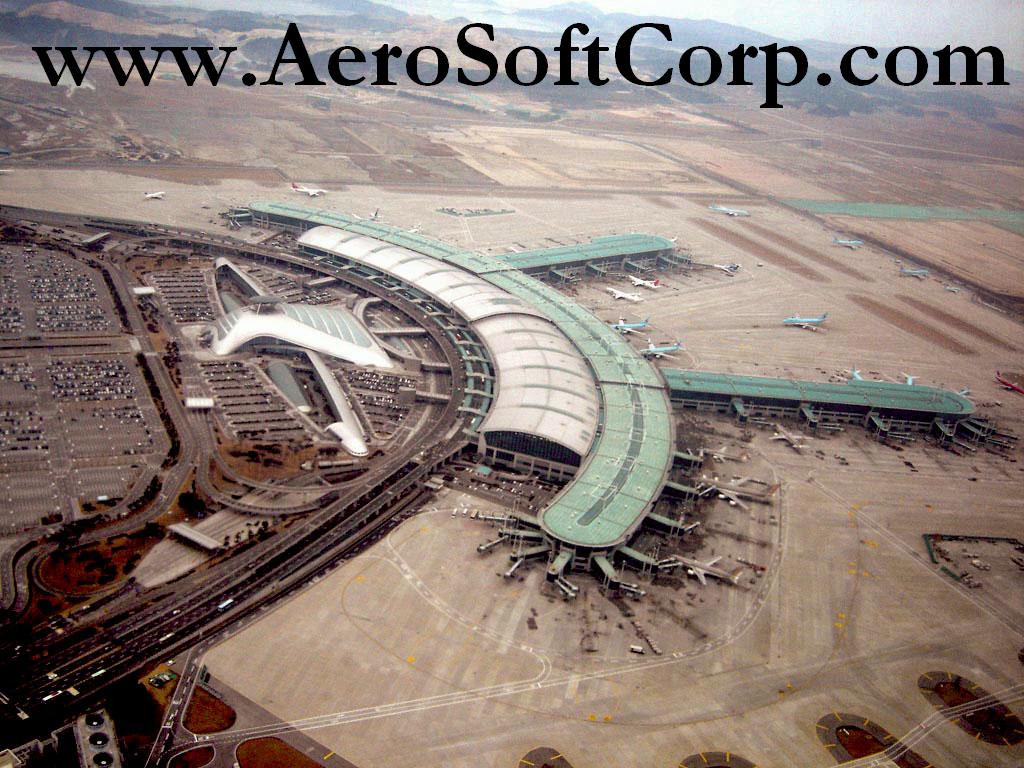
The 2013 World Airport Awards ceremony was held at Passenger Terminal EXPO in Geneva. It is the the worlds leading airport terminal conference and exhibition, and the perfect platform for Skytrax to honour the world's best airports.
As per the ranking by Skytrax top 10 best airports worldwide in 2013 are:
1. Singapore Changi Airport
2. Incheon International Airport
3. Amsterdam Schiphol Airport
4. Hong Kong International Airport
5. Beijing Capital International Airport
6. Munich Airport
7. Zurich Airport
8. Vancouver International Airport
9. Haneda Airport
10. London Heathrow Airport
These awards are voted for by airport customers from around the world and this year the survey garnered 12.1 million responses.
1) Singapore Changi Airport
For Changi, it was a triple success. Securing the Airport of the Year accolade, it picked up the awards for Best Airport in Asia and the Best Airport for Leisure Amenities. This is the fourth time Changi airport has achieved the top prize - last claiming victory back in 2010. According to the airport's website, it is a major air hub in Asia, serving more than 100 international airlines flying to some 220 cities in about 60 countries and territories worldwide.
2) Incheon International Airport
Voted for by air travellers across the globe, Incheon International Airport has won the top award, twice. This year however, it slipped to the second slot. Said to be South Korea's largest airport, Incheon is also one of the world's busiest.
3) Amsterdam Schiphol Airport
For the first time in 6 years, there was a change to the top-3 global airlines with Amsterdam Schiphol Airport accomplishing a third place finish in the survey. Airport Schiphol is the Netherlands' main international airport. Over the last 30 years, Amsterdam Schiphol Airport has won many global airport awards in various categories, from both airline and passenger organizations.
4) Hong Kong International Airport
Hong Kong International Airport is a two-terminal and two-runway facility. According to the airport's website, in 2012, 56.5 million passengers used HKIA and 4.03 million tonnes of air cargo passed through Hong Kong.
5) Beijing Capital International Airport
Beijing Capital International Airport (BCIA), is also called "China Gateway". It is among the largest, and busiest international aviation hubs in the world.
6) Munich Airport
Munich Airport is one of Germany's most renowned airports. The airport is a shopping, business and recreation hub.
7) Zurich Airport
Zurich Airport is a major airport in Switzerland. According to the airport's website, 1,998,413 passengers were handled at Zurich Airport during March 2013, a gain of 1.6% versus March 2012.
8) Vancouver International Airport
Today, 62 airlines serve Vancouver International Airport, connecting people and businesses to 99 destinations in Canada, the US and around the world. According to its website, Canada's second busiest airport, Vancouver International Airport welcomed 17.6 million people in 2012, facilitated more than 296,000 aircraft take-offs and landings and handled 228,000 tonnes of cargo.
9) Tokyo International Airport (Haneda)
One of Tokyo's primary airports, the Tokyo International Airport boasts of restaurants, shops and duty-free shops.
10) London Heathrow Airport
Heathrow Airport achieved its best ever result entering the top-10 airports for the first time and also scooping the awards for World's Best Airport Terminal for Terminal 5 and for the third year running the prize for Best Airport Shopping. Since 1955 Heathrow has been connecting people from around the globe, making it one of the world's busiest international airport. The airport's various Terminals are curently bein upgraded to offer better facilities. The airport's new Terminal 2 will open in 2014.
The Yakovlev Yak-18T is a four seat fully aerobatic utility aircraft. Introduced to train Aeroflot pilots, it has gained some popularity as a sportplane both inside and outside the former USSR. It is powered by a 268-298 kW (360-400 hp) Vedeneyev M14P radial engine, and is designed for stresses of +6.48/-3.24 g. The 18T was designed in the late 60's, as a civilian aircraft. The aircraft has a nosewheel, is a 4 (or 5) seater, and has a 9-cylinder 360 hp radial. The Yak-18T shares systems with the Yak-50/52 family. These aircraft all have the 265 kW (355 hp) Vedneyev M14 nine cylinder radial engine as well as the same underlying compressed-air system for engine starting, brakes, undercarriage and flaps. The propeller, avionics and other parts are also shared. The Yak-18T, like all Russian aircraft used for training, is aerobatic.Compared with other four-seat light aircraft such as the Cessna 172 or the Piper PA-28, the Yak-18T is only a little wider and longer but it is much heavier and is equipped with a considerably more powerful engine. The Yak-18T prototype had its first flight in mid-1967 and subsequently the type was placed in series production in Smolensk. The Yak-18T went on to become the standard basic trainer with Aeroflot flight schools, while small numbers also entered service with the Soviet Air Force as liaison and communications aircraft. After approximately 700 were built, many for Aeroflot, production ceased in the late 1980s, to be resumed in 1993.At 271/2 feet long and 361/2 feet span, the Yak is nearly four feet longer and a foot wider than a Piper Warrior, yet conveys an impression of much greater bulk. From most angles an attractive, if somewhat dated design, it stands tall on its undercarriage, towering above pilot and passengers. A high, sturdy step on each inner-wing trailing edge provides access to the cabin. The walk-around reveals traditional construction methods, riveted alloy panels forming the main structure. The rudder, double-braced tailplane and elevator are fabric covered, with a large, powerful anti-collision light atop the fin and just a single aerial breaking the lines of the main fuselage. The split elevator has an adjustable trim-tab on each side, while the rudder carries only a fixed tab. I would have expected such a powerful beast to have an adjustable device on the rudder, as I later discovered, it would be beneficial.The wing centre-section is of metal construction and carries both an oil radiator in the starboard wing-root and a large metal single-position plain flap-cum airbrake across its span, plus the inward-retracting main gear legs. Just forward of the starboard leg is an access hatch secured by three Camlock fasteners. Releasing these causes a hinged tray carrying the aircraft battery to drop down, until arrested by two cables. Just two catches release the battery from the tray for service, charging or replacement: obviously a military specification, and a considerable improvement on access over just about every other civilian tourer I have yet encountered. There is an external power connector behind a small access door near the port wing-root.The wing dihedral starts at the break point just outboard of the main undercarriage. The outer wing panels are fabric-covered and can be removed, leaving the aircraft standing on its wheels for ease of servicing. The port wing carries a long barber's-pole-striped pitot tube, the stall warning vane, and a large-diameter landing light. The Frieze ailerons are also fabric-covered, while tie-down rings are provided near each wingtip. Each wing contains a 95 litre (21 imperial gallon) fuel tank, of which four litres are unusable.On each of the three gear legs is a small, forward-facing white light, about an inch in diameter. These are provided as an indicator for the benefit of the quaintly-named 'flight dispatcher', who can see immediately if a night-flying student pilot has remembered to select undercarriage down before giving him landing clearance. (Don't think it will catch on over here, though). In addition to the cockpit undercarriage-position indicator, three small mechanical plungers protrude, one from the top surface of each wing and one just in front of the windscreen, to act as a belt-and-braces method of checking the undercarriage position. The two main wheels seem relatively thin (5.00 x 500) for what is touted as a rough-field aircraft. Long anti-static wicks trail from each main wheel assembly.The civilian 18T conveys its military heritage from the first glance inside the spacious cockpit. Each door is individually jettisonable via a prominent red handle below the panel. The aircraft can be flown with both doors removed for aerial photography or other work. The fore-and-aft adjustable front seats are fairly Spartan affairs, consisting of exposed tubes partially covered in grey cloth and a blue cushion, though they are acceptably comfortable in use. From the top tube of each seat unroll two shoulder straps, with a release cable routing down to a locking handle on the lower inner frame. The four-point harness seemed a bit fiddly initially, but no doubt practice makes perfect. Neither a central fifth g-strap not second aerobatic security strap is provided. The hinged rudder pedals are simple, sturdy affairs with leather stirrups, but no brake pedals. The pedal assemblies are adjustable.Rear passengers have a wide bench seat behind which, taking up much of the baggage compartment, sits a large yellow-painted auxiliary fuel tank. This holds 95 litres which drain automatically into the wing-tanks. Future models will do away with this intrusion, as the wings will be modified to hold a total of 330 litres (73 imperial gallons).The cockpit trim and rear seat materials, colour and finish standards are reminiscent of an early 1960s aeroplane, i.e. slightly plasticky and with an almost home-made look, but durable nonetheless. The rear side windows boast sliding curtains, which are also fitted above the two front seats. Two smoked plastic sun visors hinge down from the top of the screens, adding to the 1960s impression. (Who said nostalgia ain't what it used to be?).The panel top roll is a stitched black leather affair, under which are a row of cylindrical lights, part of the triple panel lighting circuits. On top, a pull-cord arrangement unrolls a miniature window-blind in front of the pilot's screen to facilitate IMC training. A special fitment holds the cord-end ball in the extended position. The front windows are a collection four flat panels, with no attempt at curvature, looking at first glance like those on Concorde when its nose is drooped. The outer pair are angled at forty-five degrees and have their lower halves hinged to provide a clear vision panel. The Yak is also the first light aircraft I have flown which is equipped with a two-speed, self-parking windscreen wiper (but no washers!).The panel is a large grey expanse of metal with ample space for even the biggest instruments. Unlike Western layouts, it is dominated centre-stage by a huge electrically-driven and non-toppling artificial horizon. There are two long rows of switches, one under each yoke. Their functions, plus the instrument markings, are shown in orthodox Roman characters where possible (though Cyrillic letters are used if no equivalent exists, as with the ADF switch). Most flight instruments such as the ASI, VSI and altimeter are calibrated in metric units; UK certification rules will doubtless want these changed to more familiar imperial gauges on future examples.The 18T as tested is equipped with a gyro-magnetic compass that is not only adjustable for north or south hemispheres, but also individual latitudes within either one. Space precludes the fullest description of all the unusual instruments and gauges, but suffice to say that the operation of some is so simple you wonder why other designs haven't got the same thing, while others appear so needlessly complicated (to Western flyers) that it will take careful study of the extremely detailed flight manual to understand their operation and function.In the former category, for example, is the single fuel gauge and its associated selector switch. Ordinarily, it shows the total number of litres in both tanks on the outer scale. Select either tank on the switch, and the contents of that tank reads on the inner scale. Only after the auxiliary fuselage tank has drained automatically into the wing tanks does the total begin to reduce from maximum. The fuel is controlled by a prominent red T-handle on the panel left of the quadrant. Push for On, pull for Off - very simple, very safe. Likewise the combined single ammeter/voltmeter. Press its switch for amps, release for volts.On the other hand, for some reason each yoke sports two PTT buttons, one on each horn. The left-hand one opens the air-ground transmission circuit while the right-hand one activates the cockpit intercom. Not only does this encourage two hands on the yoke (not recognised as good piloting practice), but it requires the pilot to remove his hand from the throttle to talk to his companion. While just about acceptable in normal operation, during the photo-formating it proved to be a real pain.The pneumatically-operated brakes work through a pull-handle on the back of each yoke. The P2 position has an override button to allow an instructor to release the brakes if he feels they are being used too enthusiastically by the student. The park brake consists of a further small button under the yoke. Pull the lever, press the button and the Yak is arrested. In common with many military-originated aircraft, the 18T has no nose-wheel steering. To initiate a turn on the ground requires differential braking by pressing the appropriate rudder pedal, then squeezing the brake lever.The pitch trimmer is a small handle not unlike a window-winder, set on the left-hand cockpit wall. It is low-geared, taking five turns from full aft to full nose-down trim. No position indicator is provided other than a light, one of an array of six on the panel, which indicates neutral trim. Once out of neutral the light is extinguished. If the light is out when commencing the starting procedure, you have to wind the handle to establish the neutral datum before setting the desired trim. Other annunciation lights in the same block show Fuel low, Gen. fail, while further along the panel is a set of just two red lights. These augment the stall warner by flashing Slow and Stall as the aircraft approaches the stalling speed. DIMENSION:--> Length : 27 ft 6 in Height : 11 ft 2 in Wing span: 36 ft 7 in Area : 202.36 sq. ft
Weights and loadings:--> Max auw (utility) : 3,637 lb (aerobatic) :3,307 lb Empty weight :2,683 lb Useful load (utility) :954 lb (aerobatic) :624 lb Fuel capacity(as tested) :62,7 imp gall Wing loading (utility) :17.97 lb/sq ft (aerobatic) :16.34 lb/sq ft Power loading (utility) :10.10 lb/hp (aerobatic) : 9.18 lb/hp
PERFORMANCE--> Cruise @ 59% crank speed 110 kt#Max speed in level flight 156 kt Vne :161 kt Stall (clean) :64 kt (with flaps and gear) :55 kt Take-off roll (firm grass) :370 m Landing roll (firm grass) :390 m Take-off (firm grass, to 50 ft) :690 m Landing (firm grass, from 50 ft) :790 m Range (as tested, with reserves) :485 nm Rate of climb at s/l :1,082 ft/min Service ceiling :18,000 ft
Engine :- Vedeneyev M-14P supercharged single-row air-cooled nine-cylinder radial producing 360 hp at 99 per cent crankshaft speed (2,900 rpm). UK TBO: to be determined. Propeller: B530TA-A35 constant speed, two-bladed, wood, 94.5 inches diameter.
Special awards: Best Airport for Baggage Delivery (#2)
Why it's awesome: The Copenhagen Airport is the busiest airport in the Nordic countries serving nearly 60,000 passengers on more than 60 airlines everyday. The airport is only 5 miles away from the city center, making it easily accessible. It is also one of the hubs in the Star Alliance, a network of 27 international airports that flies to 1,610 airports in 181 countries.
#9 Kuala Lumpur International Airport
Yearly passengers: 29,700,000
Last year's rank: 5
Special awards: Best Airport Immigration Service (#1)
Why it's awesome: Kuala Lumpur is located in the southern corridor of Malaysia and one of Asia's busiest airports. The main terminal keeps green in mind, an entire section of the rain forest was placed inside the main terminal with the "Airport in the forest, forest in the airport," idea.
Source: Skytrax World Airport Awards
#8 Auckland International Airport
Yearly passengers: 13,202,772
Last year's rank: 9
Special awards: Airport Staff Excellence Australia/Pacific (#3)
Why it's awesome: Auckland is New Zealand's airport. Over 20 international airlines serve passengers and 45 flights take off per hour. Aukland provides thousands of jobs and contributes $14 billion to the economy as the country's second largest cargo port.
Source: Skytrax World Airport Awards
#7 Zurich Airport
Yearly passengers: 22,900,000
Last year's rank: 6
Special awards: Best Baggage Delivery (#1) and Best Terminal Cleanliness (#2)
Why it's awesome: The Zurich Airport is Switzerland's airport located 7 miles north of the Zurich city center. The airport features a porter service where travelers pay a fee and a porter picks up your bag from anywhere in the airport and delivers it to your final destination.
Source: Skytrax World Airport Awards
#6 Amsterdam Schiphol
Yearly passengers: 45,211,749
Last year's rank: 7
Special awards: Best Airport Leisure Amenities (#3) and Best Airport For International Travel (#3)
Why it's awesome: Schiphol opened in 1916 as a military airfield and has now transformed into one of the busiest airports in the world. While travelers wait for their flight departures, they can enjoy a massage or play a game of poker at the casino.
Source: Skytrax World Airport Awards
#5 Beijing Capital International Airport
Yearly passengers: 73,891,801
Last year's rank: 8
Special awards: Best Airport Immigration Service (#2)
Why it's awesome: Beijing Capital is the busiest airport in Asia and can accommodate up to 78 million passengers per year. The tallest building, terminal 3, has a red painted roof, China's good luck color.
Source: Skytrax World Airport Awards
#4 Munich Airport
Yearly passengers: 34,721,605
Last year's rank: 4
Special awards: Best Airport Leisure Amenities (#2) and Best Airport Dining (#3)
Why it's awesome: Munich is Germany's second busiest airport. Passengers enjoy aesthetically pleasing terminals on the walk to the gate. The airport was built in terms of an "airport in the form of an urban landscape." Many of the walls and ceilings are made of glass, making the airport feel large and open.
Source: Skytrax World Airport Awards
#3 Incheon International Airport
Yearly passengers: 30,000,000
Last year's rank: 2
Special awards: Best International Transit Airport (#2), Best Airport Security Processing (#3), Best Airport Cleanliness (#1), and Best Airport Washrooms (#2)
Why it's awesome: Incheon is the largest airport in South Korea serving passengers with over 70 airlines. The airport features a museum showcasing Korean culture and a center for traditional Korean culture where travelers can enjoy performances while they wait for their connecting flight.
Source: Skytrax World Airport Awards
#2 Singapore Changi Airport
Yearly passengers: 42,038,777
Last year's rank: 1
Special awards: Best Airport Leisure Amenities (#1), Best Airport Shopping (#2), Best International Transit Airport (#1), and Best Airport Dining (#3)
Why it's awesome: Changi takes passengers to over 200 destinations on more than 90 international airlines and handles about 5,000 arrivals and departures each week. The airport is also home to a nature trail, fitness center, swimming pool, and Singapore's tallest slide.
Source: Skytrax World Airport Awards
#1 Hong Kong International Airport
Yearly passengers: 50,410,819
Last year's rank: 3
Special awards: Best Airport Washrooms (#3) and Best Airport Dining (#3)
Why it's awesome: Located less than five flying hours from half of the world's population, Hong Kong's airport is one of the busiest in the world. The airport also features a nine-hole golf course to pass the time during long layovers.
TEN LARGEST AIRPORTS
1. Hartsfield–Jackson Atlanta International
2. Beijing Capital International Airport
3. London Heathrow Airport
4. O'Hare International Airport
5. Tokyo International Airport
6. Los Angeles International Airport
7. Paris Charles de Gaulle Airport
8. Dallas Fort Worth International Airport
9. Frankfurt Airport
10. Hong Kong International Airport
TEN BUSIEST AIRPORTS
1. Hartsfield-Jackson Atlanta International Airport (ATL/KATL) – Atlanta, Georgia, United States – 55,868,147 passengers
Known variously as Atlanta Airport, Hartsfield Airport and Hartsfield-Jackson, the airport is about seven miles to the south of the city’s central business district. It has had the greatest amount of passenger traffic since 1998. It is a focus city of Southwest Airlines, and is also the site of the world’s largest airline hub, serving Delta Air Lines and Express Jet, the connection partner of Delta. It has 207 domestic and international gates.
2. Beijing Capital International Airport (PEK/ZBAA) – Chaoyang, Beijing, China – 46,950,904 passengers
This is the main international airport that serves the Chinese capital of Beijing. It is located 20 miles northeast of the capital’s center. Its IATA airport code is still based on the Romanized name of the capital, Peking. The airport is owned and operated by the government-controlled Beijing Capital International Airport Company Limited.
Heathrow is located in West London and is the busiest airport in the United Kingdom and the whole of the European Union in terms of passenger traffic. It is also the busiest airport in the world when it comes to serving international passengers. Heathrow is the flagship in London’s airport system that includes Gatwicck, Southend, Stansted, Luton and London City. It is estimated to contribute around 2.7 percent to the city’s economy.
4. O’Hare International Airport (ORD/KORD) – Chicago, Illinois, United States – 39,070,976 passengers
Variously known as O’Hare Field, Chicago Airport or Chicago International Airport, the airport is located in the northwestern corner of the city, 17 miles away from the center. The airport is the second largest hub of both United Airlines and American Airlines.
5. Tokyo International Airport (HND/RJTT) – Tokyo, Japan – 37,142,196 passengers
Tokyo International Airport is also called Haneda Airport and is located around 8.7 miles south of Tokyo Station. It used to handle most of the domestic flights to and from Tokyo, with Narita handling the majority of the international flights. A dedicated international runway was opened in 2010, which led to a dramatic increase in the number of international flights, as Haneda used to handle only special charter flights to Hong Kong, Seoul, Shanghai and Taipei. The number if expected to rise even further as the Japanese government plans to expand the airport’s international role.
6. Los Angeles International Airport (LAX/KLAX) – Los Angeles, California, United States – 37,129,716 passengers
Los Angeles International Airport is located in southwestern Los Angeles about 16 miles away from the city’s downtown area. The airport serves as the gateway to the Pacific Rim, with its heavy load of flight operations, passenger traffic and air cargo activity. It is the busiest airport in the entire West Coast of the country.
7. Paris Charles de Gaulle Airport (CDG/LFPG) – Roissy en France, Ile de France, France – 35,746,812 passengers
Paris Charles de Gaulle Airport is also known as Roissy Airport. It is one of the world’s primary aviation centers and it is also the largest airport in France. It also serves as the principal hub of Air France. It is considered as the busiest airport in Europe in terms of aircraft movement and the second busiest in the continent in terms of cargo traffic.
8. Dallas Fort Worth International Airport (DFW/KDFW) – Dallas and Fort Worth, Texas, United States – 34,175,500 passengers
The airport is situated between the Texan cities of Dallas and Fort Worth. It is used as the primary hub by American Airlines, and it is considered the fourth busiest airport in the world in terms of aircraft movements. It is the second largest airport in the United States in terms of land area, after the Denver International Airport in Colorado. The area is so large that the airport has its own zip code and public services.
Frankfurt Airport is the busiest airport in the world in terms of number of international destinations being served, with 275 destinations in 111 countries. It is considered as the busiest airport in Europe in terms of cargo traffic. The airport’s space greatly expanded when the United States closed down a major air base located at the airport’s southern end. The air base, called the Rhein Main Air Base, shut down in 2005. Fraport, the transport company that runs Frankfurt Airport, then acquired it. Frankfurt Airport also serves as the main hub of the German flag carrier Lufthansa and of Condor Flugdienst. As the airport is already bursting at its seams, Lufthansa has also opened a secondary hub in the airport in Munich, where medium and long-haul flights are available.
10. Soekarno Hatta International Airport (CGK/WIII) – Cengkareng, Tangerang, Banten, Indonesia – 33,095,953 passengers
Also called Cengkareng Airport, the airport is located to the west of the capital of Indonesia called Jakarta. It was named after the country’s first president and vice president, Soekarno and Mohammad Hatta respectively. The airport began its operations in 1985, bringing with it all the domestic and international flights that were previously served by two separate airports. It has continuously expanded since then, with a second terminal opening in 1992, and a third terminal being added in 2009. It has been posting remarkable increase in passenger traffic, registering an 18.5 percent uptick in 2010, which is equivalent to 8 million passengers.


.jpeg)
.jpeg)
.jpeg)
.jpeg)